Ingredient: zinc
Zinc Gluconate in HoneyBoost: What 2.5 mg Really Means
Zinc gluconate in HoneyBoost is an essential mineral printed at 2.5 mg per gummy, which is 23% of the 11 mg Daily Value. It is the only line with a Daily Value. The adult upper limit is 40 mg a day, so one gummy is about 6% of that. We found no source linking zinc to testosterone or sexual function.
- Per gummy2.5 mg zinc
- Daily Value23% (label)
- Upper limit40 mg a day
Written by the HoneyBoost label deskUpdated
The basics
What is zinc gluconate in HoneyBoost?
Zinc gluconate is a zinc salt, and it is the first line under the sugar rows on the HoneyBoost panel: “Zinc (as zinc gluconate) 2.5 mg, 23% DV”.
Zinc is an essential mineral. The body needs it every day and cannot store a large reserve. The NIH Office of Dietary Supplements sets the adult male Recommended Dietary Allowance at 11 mg a day (NIH ODS, Zinc).
This is the one line on the panel with a Daily Value. The other six lines print “Daily Value not established”. That makes zinc the easiest line to judge against a known number.
| Name on the label | Zinc (as zinc gluconate) |
|---|---|
| What it is | Essential mineral; the label names the gluconate salt |
| Place on the label | 1 of 7 lines, in label order |
| Amount per 1-gummy serving | 2.5 mg per gummy as zinc gluconate |
| Daily Value | 23% (printed) |
| Amount used in research | Adult male RDA 11 mg a day, which is also the Daily Value; upper limit 40 mg a day |
| How the label compares | 2.5 mg is about 23% of the 11 mg Daily Value (the label prints 23%) and about 6% of the 40 mg upper limit |
| Strength of evidence | Established nutrient. The NIH fact sheet makes no statement about zinc and testosterone, sexual function or fertility, so none is made here |
| Marketed or traditional use | A trace mineral the body needs; the only line on the panel with a Daily Value |
| Main caution | Zinc can lower how well quinolone and tetracycline antibiotics and penicillamine are absorbed, and thiazide diuretics raise zinc loss. Ask your pharmacist if you take any of these. |
The seven lines are compared side by side on the ingredients page.
The numbers
How much zinc is in one HoneyBoost gummy?
One gummy has 2.5 mg of zinc, and a 30-gummy bottle holds 75 mg in total. At one gummy a day, that is the printed serving.
The label prints 23% of the Daily Value. The math gives 22.7%, because 2.5 divided by 11 is 0.227, and the label rounds. Against the 40 mg upper limit, one gummy is about 6% (NIH ODS, Zinc).
Zinc: label next to the reference amounts
The label prints 23% DV; 2.5 mg of the 11 mg Daily Value is 22.7%. The NIH page does not link zinc to testosterone or sexual function. (NIH ODS, Zinc)
| Measure | Amount | One gummy is |
|---|---|---|
| Label amount | 2.5 mg per gummy | 1 gummy |
| Daily Value and adult male RDA | 11 mg a day | 23% (printed) |
| Upper limit for adults | 40 mg a day | about 6% |
| Whole bottle | 75 mg across 30 gummies | 30 servings |
The ODS page says labels declare elemental zinc, so the 2.5 mg counts the zinc itself, not the whole salt (NIH ODS, Zinc). The zinc in your food and in any other supplement counts toward the same daily limit.
What studies say
Is zinc good for men, and does it help testosterone?
Men need zinc, like everyone else. We found no source in this site's set that links zinc to testosterone, sexual function or male fertility.
The NIH fact sheet on zinc makes no statement on those topics, so we make none for the gummy (NIH ODS, Zinc). The front of the label says “Male Vitality Formula”. That wording does not name zinc as the reason.
A 2020 review looked at 50 “testosterone boosting” supplements. It found that 61.5% had no published data for their ingredients, and that 13 products went above the upper limit for zinc, vitamin B3 or magnesium (Clemesha 2020, 'Testosterone boosting' supplements review). That review is about the category. It says nothing about this bottle, and 2.5 mg sits far under that limit.
Low testosterone is a separate cause that a doctor can test. A mineral at 2.5 mg is not a test and not a fix.
Zinc at 2.5 mg is a small nutrient top-up. It is not evidence of any effect on drive, stamina or erections.
Cautions
What are the zinc side effects and interactions?
At 2.5 mg, zinc is well under the 40 mg upper limit, so the main question is not the amount. It is your medicines, because zinc can change how some of them are absorbed.
Quinolone and tetracycline antibiotics
Zinc can lower their absorption. The ODS advice is to take the antibiotic at least 2 hours before zinc, or 4 to 6 hours after (NIH ODS, Zinc).
Penicillamine
Zinc can lower absorption of this medicine too. Ask your pharmacist how to space the doses.
Thiazide diuretics
These water pills raise the zinc you lose in urine. Mention the gummy to the person who manages your blood pressure.
The label itself says not to take HoneyBoost if you take other medications or have a medical condition, and to consult a physician first. Keep taking any prescribed medicine, and never stop one because of a supplement.
Chest pain or other heart attack signs: call 911 (CDC, Heart attack signs). An erection that lasts over 4 hours needs emergency care (Mayo Clinic, Priapism). Erection trouble itself deserves a doctor's visit, because causes such as diabetes and heart disease are often treatable (NIDDK, Causes of ED (incl. medicines, mood)).
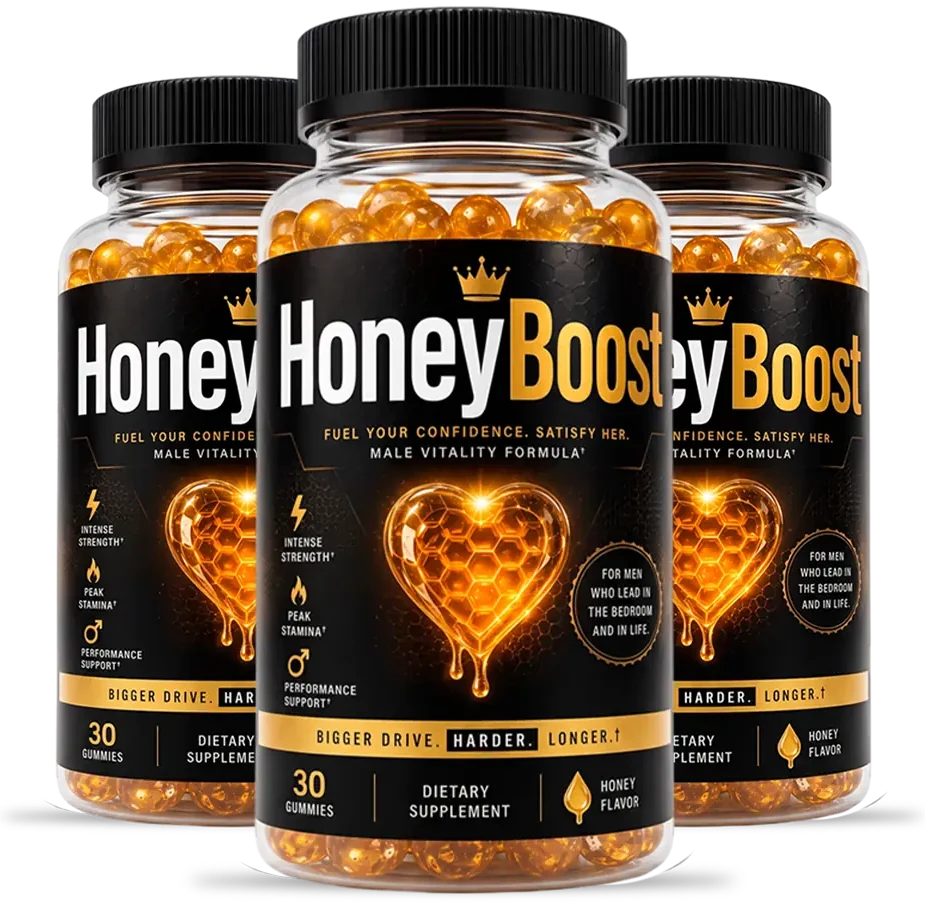
HoneyBoost: 2, 3 or 6 bottles30 gummies a bottle · 30 days at 1 a day · 60-day money-back guarantee
See packsPhoto note
Is the zinc in HoneyBoost the metal in the photo?
No. The photo in the page header shows pieces of zinc metal. The label lists zinc gluconate, a salt, which is a different form.
The brand supplied the stock photo, and we show it as the brand's picture only. It is not an image of the gummy's zinc and not proof of what is in the bottle. Only the label panel tells you that.
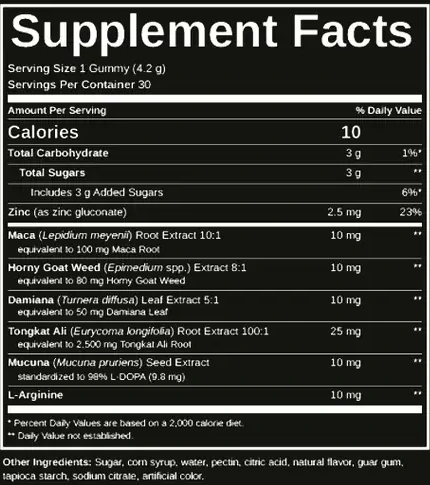
The label does not say how much of the gummy's 4.2 g is the salt. It prints 2.5 mg of zinc and stops there. For the whole picture of the panel, see the supplement facts page and the label vs studies page.
Bottom line
Should zinc decide whether you buy HoneyBoost?
Probably not. Zinc is a real nutrient at a modest amount, and it is the best-understood line on the panel. It is also the line least tied to the claims on the front.
- The amount is printed, and so is the Daily Value.
- One gummy is far under the 40 mg upper limit.
- No source we read links this amount of zinc to a result for men.
- Your antibiotics, diuretics and other medicines matter more than the zinc itself.
Each gummy also has 3 g of added sugar. If you decide to order, confirm the price and the guarantee at checkout; the pack prices are on the pricing page. Zinc is one of seven lines, so read the rest first.
FAQ
HoneyBoost questions people ask
What is zinc gluconate?
Zinc gluconate is a zinc salt used in supplements. On the HoneyBoost label it appears as zinc (as zinc gluconate) at 2.5 mg per gummy. The label prints the amount of zinc itself, which is 23% of the 11 mg Daily Value.
How much zinc does HoneyBoost have?
Each HoneyBoost gummy lists 2.5 mg of zinc, and a bottle of 30 gummies holds 75 mg in total. The label prints 23% of the Daily Value per gummy. One gummy is about 6% of the 40 mg adult upper limit.
Why does the label say 23% when 2.5 divided by 11 is 22.7%?
Labels round the percent Daily Value to a whole number. The math on 2.5 mg of zinc against the 11 mg Daily Value gives 22.7%, and the label prints 23%. Both numbers describe the same amount.
Is zinc linked to testosterone?
We found no source in our set that shows it. The NIH fact sheet on zinc makes no statement on zinc and testosterone. Low testosterone has other causes that a doctor can test, so ask about a blood test.
Can you take zinc with antibiotics?
Sometimes, with spacing. Zinc can lower the absorption of quinolone and tetracycline antibiotics. The NIH advice is to take the antibiotic at least 2 hours before zinc or 4 to 6 hours after. Ask your pharmacist.
Is 2.5 mg of zinc too much?
For most adults, no. It is about 6% of the 40 mg upper limit and 23% of the 11 mg Daily Value. Zinc from food and other supplements adds to the total, and the label says to consult a physician before use.
Does the HoneyBoost zinc photo show the real ingredient?
No. The header photo is the brand's stock picture of zinc metal. The label lists zinc gluconate, a salt. The picture shows a metal, not the contents of the bottle, so rely on the printed Supplement Facts panel.
Who wrote this
Written and reviewed by
Pages built from the label, the brand panels and linked NIH, FDA, CDC, FTC and peer-reviewed sources.
Last updated . Read our editorial standards and how we check reviews. This website is the information site for a USA Authorized HoneyBoost Retailer. It is not the manufacturer or the distributor named on the label. We earn money when you buy through our order links.
Keep reading
More about HoneyBoost
USA Authorized HoneyBoost Retailer
Ready to try HoneyBoost?
Check your medicines first, especially nitrates, erection medicines and blood pressure medicine, then pick a pack. One bottle is 30 days at 1 gummy a day; 3 bottles cover 90 days and 6 cover 180.
- Secure checkout
- 60-day money-back guarantee
- Ships from the U.S. with tracking