Our method
Editorial Standards: How We Check Supplement Claims
How we check supplement claims is simple: the bottle label comes first, every study is tied to one ingredient, and every number is compared with the 7 printed label lines. We link NIH, FDA, CDC, FTC and journal sources, round gaps down, and say plainly when we found no source. No study tests HoneyBoost itself.
- Starting pointThe bottle label
- Study ruleOne ingredient at a time
- GapsRounded down
Written by the HoneyBoost label deskUpdated
The method
How do we check supplement claims?
We check claims in four steps: read the label, quote the claim, find the study, then compare the dose. A claim passes only when the evidence matches the product in front of you.
The FTC says health benefit claims need competent and reliable scientific evidence, which for benefits generally means randomized, controlled human testing. Animal and lab studies are not enough on their own (FTC, Health Products Guidance). We hold ourselves to the same bar when we describe research, and we say so when a finding comes only from animals or a test tube.
Read the label
We copy the amounts from the Supplement Facts panel, the warnings and the Other ingredients. The label wins over any seller page.
Quote the claim
Claims such as “Male Vitality Formula” appear only inside quotation marks, so you can see what is being promised.
Find the study
We look for human trials of each single ingredient and note the dose, the length and who took part.
Compare the dose
We divide the studied amount by the label amount and show the gap.
What we check
What does the HoneyBoost label desk verify on every page?
Each page passes a set of checks before it goes up. The table lists what we check and what counts as a pass.
| We check | Pass means |
|---|---|
| Product facts | Match the bottle label word for word, including the serving of 1 gummy (4.2 g) |
| Health statements | Tied to a linked source that says the same thing |
| Study findings | Name the ingredient, the dose and the group studied |
| Dose comparisons | Rounded down, with the words “at least” |
| Brand claims | Shown in quotation marks and answered with evidence |
| Medicine cautions | Present once, plain and complete |
| Prices | Only the three pack prices; shipping as shown at checkout |
| Reviews | None printed until verified |
When the label and the seller disagree
The seller's FAQ page names ashwagandha and L-arginine HCl, which the label does not print. The label says “Lab Tested, No Artificial Additives” and also lists artificial color. The label prints no honey, even with “Honey Flavor” on the front. We print each side, say which one is on the bottle, and explain the gap. We never blend two versions into one.
When a number is unknown
The maker, the directions, the storage advice, the lot's lab and the shipping price are not printed on the label we read. We say so instead of guessing. Where a source gives no figure, as with damiana doses, we write that no comparison is possible.
See the label vs studies page for the dose comparison in full.
Sources
Which sources do we trust for supplement information?
We prefer government health agencies, major medical centers and peer-reviewed journals. We cite what each source actually says, no more.
For rules we use the FDA: supplements are not approved before sale (FDA, Q&A on Dietary Supplements), and the company is responsible for safety and labeling (FDA, Dietary Supplements). For safety we use NCCIH and MedlinePlus. For research we read the published abstract and note its limits. Where a page is undated, we say so.
Agencies
NIH fact sheets, FDA notices, CDC symptom pages and FTC guidance.
Medical centers
Mayo Clinic and Memorial Sloan Kettering pages on conditions and herbs.
Journals
Trials and reviews of single ingredients, with dose and group stated.
Some research was read through Europe PMC abstracts when the journal site blocked automated access. We report only what the abstract states, including the small size of many trials. A finding on one extract at one dose is never carried over to a different extract or a smaller dose.
If we found no source for a topic, we write “we found no source” and stop.
Our limits
What will this site never claim?
We will never say HoneyBoost is a medicine, that it treats or prevents any disease, or that it has FDA sign-off. The FDA does not approve dietary supplements before they are sold (FDA, Q&A on Dietary Supplements).
We also do not claim to have tested the gummy. No lab report is published, and the lot and CoA references the seller shows are seller references, not lab proof. USP runs a voluntary verification program for supplements, and we found no USP mark on this label (USP, Verification Program).
What we do
- Print every label amount
- Show strengths and weak spots
- Name what the label does not print
What we never do
- Invent reviews or ratings
- Promise a result
- Hide a gap between label and seller page
The FTC rule against fake reviews applies to everyone who sells online (FTC, Fake reviews rule (Aug 2024)).
Corrections
How do we fix mistakes and update pages?
Send corrections to [email protected] and we check them against the source. Each page shows a last updated date, currently October 30, 2026.
If a label changes, a source is revised or a reader finds an error, we update the page and the date. The date on the page tells you when we last checked it, so a changed finding never looks like an old one. Health pages also carry a medical reviewer slot, still unnamed. See who we are.
FAQ
HoneyBoost questions people ask
What makes a source good enough for this site?
It must be a government agency, a major medical center or a peer-reviewed journal, and its text must support the exact sentence we write. We open each source and copy its numbers, dates and limits, and we note when a page is undated.
How do you treat claims on the seller's pages?
We quote them, label them as the seller's wording, and compare them with the label. When the two disagree, the label wins, and we print both so you can see the gap. We never merge them into one statement.
Why do you say “at least” when comparing doses?
Label amounts are rounded, and extract strengths vary, so we round each gap down. A claim that a study used at least 8 times the label amount cannot overstate the difference, which keeps the comparison fair.
Does this site run lab tests on HoneyBoost?
No. We do not test the gummy, and the label names no lab. We read the label and published research. If a verified lab report appears, we will link it and say who made it.
Why are brand claims always in quotation marks?
Quotation marks show whose words they are. “Peak Stamina” and similar phrases are the brand's claims, not our findings. We follow each one with what research says about the single ingredients.
Can anyone pay to change what a page says?
No. Order links earn this site money, and that is stated openly on the about page. Our rule is that income never changes a finding, a caution or a caveat on a page.
Where do your health cautions come from?
From the label's own warning and from NIH, FDA, CDC and Mayo Clinic pages. We repeat them in plain words: keep taking prescribed medicine, ask a pharmacist about interactions, and call 911 for chest pain.
Who wrote this
Written and reviewed by
Pages built from the label, the brand panels and linked NIH, FDA, CDC, FTC and peer-reviewed sources.
Last updated . Read our editorial standards and how we check reviews. This website is the information site for a USA Authorized HoneyBoost Retailer. It is not the manufacturer or the distributor named on the label. We earn money when you buy through our order links.
Keep reading
More about HoneyBoost
USA Authorized HoneyBoost Retailer
Ready to try HoneyBoost?
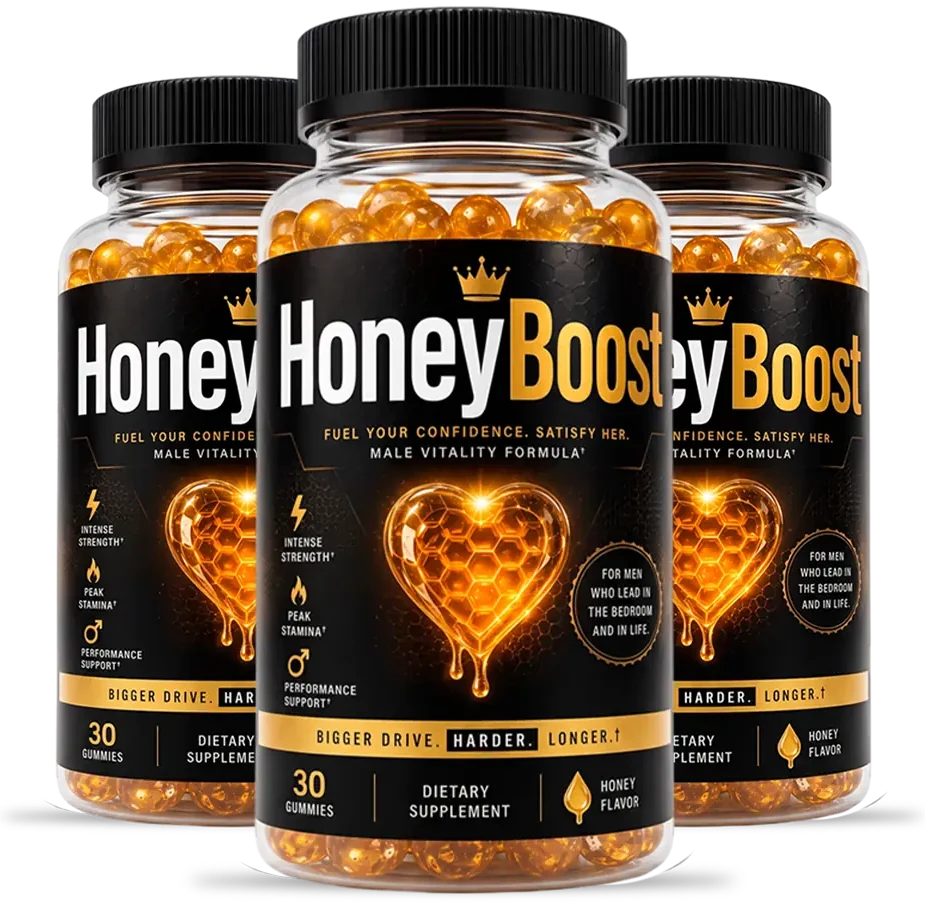
Check your medicines first, especially nitrates, erection medicines and blood pressure medicine, then pick a pack. One bottle is 30 days at 1 gummy a day; 3 bottles cover 90 days and 6 cover 180.
- Secure checkout
- 60-day money-back guarantee
- Ships from the U.S. with tracking